

Waldorf Education: Producing Creative Scientists
Fifth grade students may not be ready to write research papers but they are ready to make their first steps in that direction. Our Fifth grade students had their first introduction to group research work this Fall. Some liked working in groups and others were challenged by this work. When asked about this, Fifth grade teacher, Mr. Schofield says:
“I feel an obligation to introduce my fifth grade students to group work. I feel Waldorf Education can potentially produce individuals who are creative scientists and mathematicians. That is what I am trying to achieve.”
- Mark Schofield, Class 5 Teacher
Our fifth grade curriculum has North American Geography as a topic for grade five. Mr. Schofield, thought the idea of studying biomes (ecological communities) went nicely with their study of plants this year and animals last year.
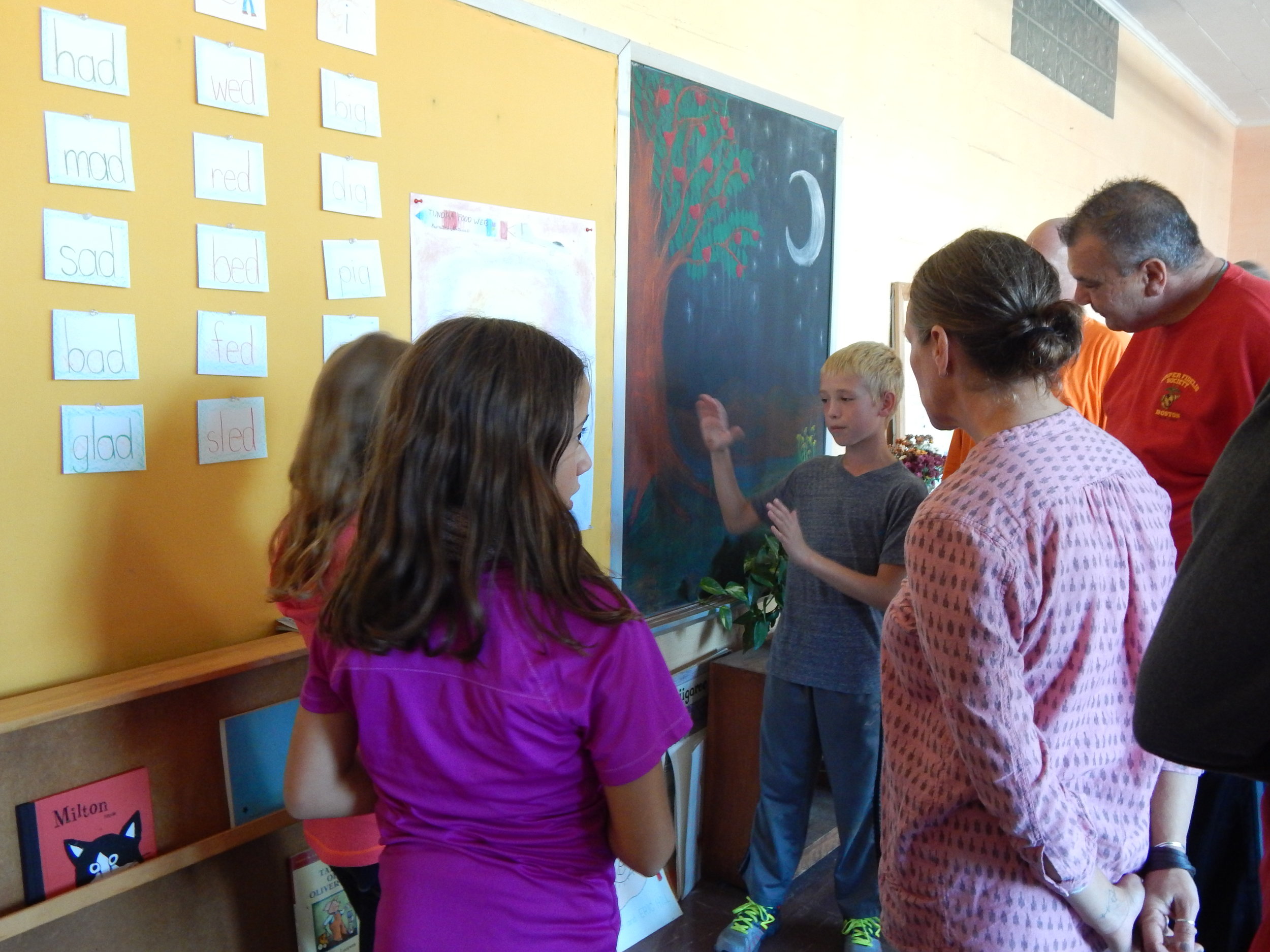
Fifth grade students may not be ready to write research papers but they are ready to make their first steps in that direction. Our Fifth grade students had their first introduction to group research work this Fall. Some liked working in groups and others were challenged by this work. When asked about this, Fifth grade teacher, Mr. Schofield says:
“I feel an obligation to introduce my fifth grade students to group work. I feel Waldorf Education can potentially produce individuals who are creative scientists and mathematicians. That is what I am trying to achieve.”
- Mark Schofield, Class 5 Teacher
Our fifth grade curriculum has North American Geography as a topic for grade five. Mr. Schofield, thought the idea of studying biomes (ecological communities) went nicely with their study of plants this year and animals last year.
Students were organized into groups of 3 or 4 students and asked to choose a Biome and research it. The assignment was to draw a food web for their biome. The students picked the desert, the plains, the tundra and the boreal forest biomes.
The project had strict parameters on the research. Students read 2 or 3 books on their biome and were asked to do research based on those books. Once the research was completed and the projects were ready, the teams of students presented their projects to classmates and their parents. Students were encouraged to engage visitors and tell them about their subjects and their work.
Classmates and parents came ready with questions to ask the student teams and all who attended were impressed with the students’ ability to present what they learned.
Click here to get our school blog e-mail updates.
A Community that Gardens Together
Here at the Waldorf School of Cape Cod, we garden together as a community. We have been gardening at WSCC for at least 25 years, but the addition of the lunch program sparked a new level of commitment to growing food in a quantity that would provide useful parts of the menu.
Our Seed to Table Meals
Before we had a lunch program, my goal as a gardening teacher was to grow a wide variety of plants. Our harvests sometimes became a salad prepared and eaten in third grade. I often sent food home with children and sometimes this made its way into dinner and at other times a child would tell me that her lost carrots were found shriveled in the back of the car. It is wonderful to know all the good, organic food we grow will be eaten - in Chef Peet's lunch, in the Wednesday take home meals, as snack during our weekly faculty meetings or via veggie sales in the lobby.

by Kim Allsup, Gardening Teacher
Here at the Waldorf School of Cape Cod, we garden together as a community. We have been gardening at WSCC for at least 25 years, but the addition of the lunch program sparked a new level of commitment to growing food in a quantity that would provide useful parts of the menu.
Our Seed to Table Meals
Before we had a lunch program, my goal as a gardening teacher was to grow a wide variety of plants. Our harvests sometimes became a salad prepared and eaten in third grade. I often sent food home with children and sometimes this made its way into dinner and at other times a child would tell me that her lost carrots were found shriveled in the back of the car. It is wonderful to know all the good, organic food we grow will be eaten - in Chef Peet's lunch, in the Wednesday take home meals, as snack during our weekly faculty meetings or via veggie sales in the lobby.
Today, the privilege of carrying the harvest to the kitchen is prized. I hear, "Can I take this to Chef Peet?" at least ten times in each gardening class. During lunch our youngest children often look at certain beans, peas, or strawberries in their meal and announce, "I picked this one, I remember it."
Our School Sunhouse
Of course the ability to harvest a crop large enough each week to be a meaningful contribution to lunch is possible because we have a hoop house. I am continually grateful for the amazing community support and the efforts of a dedicated team that created this growing space.
Autumn is a busy time for our garden work because it is the traditional harvest season. In the sunhouse it is also a vital season for planting as winter harvests depend on strong fall growth before the light levels decrease.
Follow our work in the Waldorf School of Cape Cod Sunhouse on Twitter and Pinterest.
Gardening in Nursery Through The Grades
Of course we are both growing food to eat and we are growing children who appreciate and come to understand the nature of plants and the work of gardening. This learning through doing will mean that as adults they know how easy it can be to grow a significant amount of food.
This learning begins in Parent & Child classes and Early Childhood classes. While these groups do not officially have gardening classes, I suggest gardening projects to their teachers. This is the first year a Parent & Child class has gardened in the sunhouse.
Here is summary of our community efforts to grow our food since school began this September:
- Mrs. Green's Parent & Child class has harvested tomatoes and fingerling potatoes.
- The Sunflower children are drying beans they harvested during family gardening.
- The Morning Glories have harvested fingerling potatoes.
- Class 1/2 have brightened the garden with geraniums which will come into their classroom soon
- Class 3/4 has had a double period of gardening each week where they have planted, weeded, harvested and enjoyed drinking from nasturtium leaves using chives as straws.
- Class 5 studied cucurbits (pumpkin, zucchini, watermelon) and drew their leaves as part of their weekly class Botany in the Garden. They also planted their experimental bed and gardened on Friday afternoons for the first electives block.
- A few students from Classes 6, 7, & 8 led groups of fifth graders during electives to get the sunhouse planted for the cold months.
- Mr. Mullins and Mr. O'Hara led the middle schoolers in pulling the roof over the sunhouse after Classes 1-8 gathered to recite their lunch blessings and sing the sunhouse blessing song
- Mr. Buskey tended the French gardens he planted near the sunhouse and the gardens near the shed.
- Mrs. Small and Class 6 continue to care for the wildlife garden they planted just outside the sunhouse.
At Waldorf School of Cape Cod our whole community is involved in our gardening program and we all enjoy the benefits of our work together.
For more on gardening and education, visit our gardening teacher Kim Allsup’s blog Growing Children.
How a Waldorf Teacher Teaches Compassion
Second grade teacher, Ieeda Rico, shared the story of Saint Francis in The Wolf of Gubbio with her students. The story is one of forgiveness and compassion for humans and animals alike.
After she shared this story, the class visited some local animals in need at the MSPCA. The children brought items to the animals that the shelter requested to provide them with the care they need. This act of selflessness and compassion towards the animals was a way for the students to relate what they learned about Saint Francis to their own experience. When children are given this opportunity, they are interested, alive, and what they learn becomes their own. Waldorf schools are designed to foster this kind of learning.
“The children were so excited to have an opportunity to bring their individual gifts to the shelter, and meet the animals and staff that would directly benefit from their thoughtfulness. What a great way to directly experience the story and lessons of true compassion and giving that we are taught by great individuals in history, like St. Francis.”
Ms. Rico, Second Grade Teach, WSCC
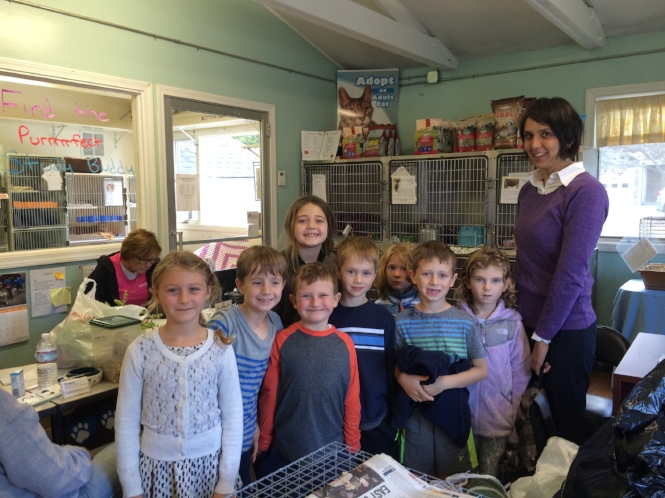
Second grade teacher, Ieeda Rico, shared the story of Saint Francis in The Wolf of Gubbio with her students. The story is one of forgiveness and compassion for humans and animals alike.
After she shared this story, the class visited some local animals in need at the MSPCA. The children brought items to the animals that the shelter requested to provide them with the care they need. This act of selflessness and compassion towards the animals was a way for the students to relate what they learned about Saint Francis to their own experience. When children are given this opportunity, they are interested, alive, and what they learn becomes their own. Waldorf schools are designed to foster this kind of learning.
“The children were so excited to have an opportunity to bring their individual gifts to the shelter, and meet the animals and staff that would directly benefit from their thoughtfulness. What a great way to directly experience the story and lessons of true compassion and giving that we are taught by great individuals in history, like St. Francis.”
Ms. Rico, Second Grade Teach, WSCC
What They Learn Becomes Their Own
To be properly prepared for life in our world today, children need more than an education designed only to promote cognitive ability and gathering information. There are actually three capacities children need to develop - imaginative thinking, emotional involvement, and determination. When emotional involvement becomes part of a child's education, what they learn becomes their own.
Emotional Involvement
Emotional involvement is an essential part of a child's education which has been missed in most current educational settings. It is imperative that education directly touch the hearts of children, to help them care about their fellow human beings.
This story is an example of one way Waldorf Schools help children become emotionally involved in what they learn which becomes part of who they are as human beings.
Welcome!
Our school blog is a resource for anyone interested in learning about a well-balanced education that inspires children to be active and creative thinkers.
Sign Up
Get our weekly school blog e-mail updates:

